
ULTIMA PLUS
Car carrier semi-trailer
Request a factory quotation in WhatsApp: ULTIMA PLUS ULTIMA TRAILERS
Commercial overview
Car carrier semi-trailers, lowbeds and dual-purpose chassis for Dubai, Abu Dhabi and UAE re-export operations.
PLUS serves vehicle-logistics projects; LOWBED serves equipment transport; CARGO is evaluated for alternating vehicle and container work. Distinguish UAE registration from re-export to a different destination. Jebel Ali is a receiving option to quote, not an included delivery commitment. Agree unloading, onward transport, workshop responsibility and spare parts for the selected running gear. Destination approval is configuration-specific.
Communication: English or Russian. Local-language pages help you review the offer; interpreter availability is agreed separately.
Car carrier semi-trailer
Request a factory quotation in WhatsApp: ULTIMA PLUS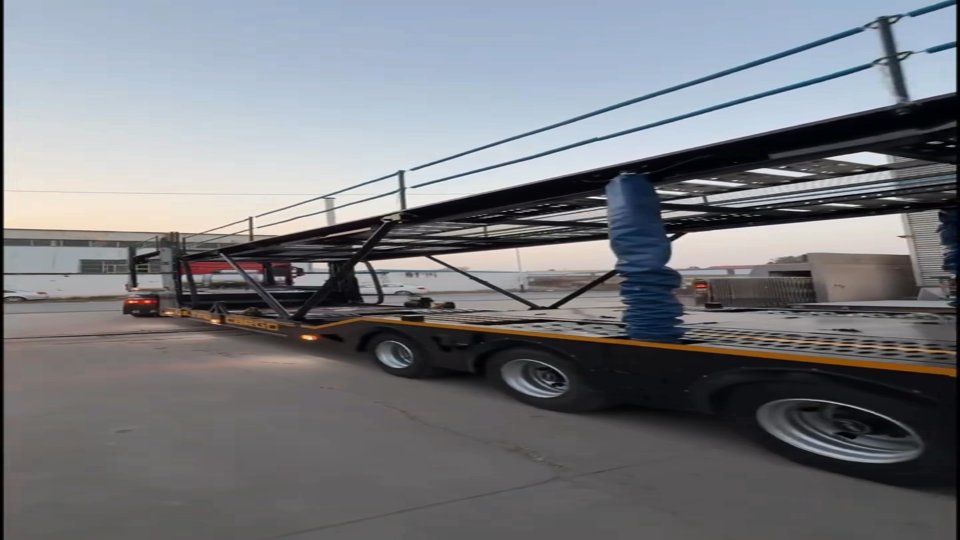
Dual-purpose car carrier / container trailer
Request a factory quotation in WhatsApp: ULTIMA CARGO
Lowbed / lowboy semi-trailer
Request a factory quotation in WhatsApp: ULTIMA LOWBEDUltima Trailers manufactures in Jinan, China. Fleet buyers, transport companies, dealers and representatives can discuss manufacturer-direct pricing, a defined specification and a batch planned for their actual operation.
Owner-reported production capacity: up to 100 semi-trailers per month. Capacity is not current output, available production slots or a guaranteed order lead time. The batch schedule is confirmed after specification approval.
Car carriers, container chassis, lowbeds, flatbeds, sidewall, tipper and livestock semi-trailers. OEM, CKD/SKD and special configurations require review of an agreed specification; the page does not promise every trailer type without engineering review.
Company and contact; operating country and receiving city; trailer type and cargo; quantity and first batch; tractor interface and component requirements; budget, currency and target date. Identify complete units versus OEM or assembly kits.
English catalogue revised November 2026. Photos show example configurations. The signed specification and quotation define the supplied equipment and terms.
After production, buyer collection in China or agreed delivery can be arranged. Agency and representation terms require separate agreement. The proposal separates factory price, configuration, inspection, packing, transport, customs responsibilities and handover point. Factory price is not a delivered price. Destination approvals, registration, components and warranty scope are checked for the actual order.
For dealer discussions, provide territory, initial product line, first-batch quantity, sales plan and service capability. Exclusivity is not automatic. Interested buyers and partners can agree a production visit: company, participants, proposed dates and models to review. Travel and booking arrangements require separate confirmation.
Buttons prepare a message for WhatsApp. Review and send it there; opening a message does not confirm the factory received an enquiry.
Priority projects include vehicle logistics and re-export, port and container operations, construction equipment transport, fleet renewal and dealer supply across Dubai, Abu Dhabi and the wider UAE.
A UAE inquiry should state whether the trailer supports re-export through Jebel Ali or another port, domestic vehicle distribution, mixed fleet work or a dealer stocking plan. Car carriers, container chassis and lowbeds should be compared as separate operating cases instead of one generic UAE trailer request. A stronger file also explains whether the first order is a one-project shipment, fleet replenishment or demonstration stock for dealer sales.
Keep the UAE page for the commercial split between re-export, domestic fleet work, dealer supply and product family selection. Move into the Dubai page when the project is anchored around Jebel Ali or a Dubai vehicle-logistics workflow, and move into the Oman page when the same buyer is balancing port handling with inland container corridors beyond a pure UAE vehicle-transport case.
Use the UAE page when the opening batch is tied to one emirate, one port workflow, one dealer launch or one fleet corridor. Move to the GCC page when the real discussion is already about multi-country coverage, territory planning, reseller structure or repeat supply across UAE, Saudi Arabia and adjacent Gulf markets rather than one UAE landing case.
Car carriers, container chassis, lowbeds, flatbeds, tippers and special trailers can be supplied as complete units, private-label OEM, CKD, SKD or components according to the approved project scope.
Before pricing is treated as useful, the buyer should confirm the operating emirate or corridor, tractor interface, vehicle or cargo profile, route-clearance constraints, preferred port, documentation language and any destination-specific registration or technical review that already exists. UAE-side registration, re-export rules and destination-country compliance remain buyer-side confirmations and should be separated from factory scope.
The first UAE buying file should separate demonstration stock, paid pilot supply, fleet replenishment and repeat dealer stock. That distinction affects trailer-family mix, shared components, spare-parts depth, branding scope, port handling assumptions and whether the factory is comparing a one-corridor opening batch or a broader stocking model.
Before a UAE fleet or dealer compares spare-parts packages, ask for a register tied to the proposed trailer configuration and drawing revision. For each agreed service item, record the component maker, model or part reference, quantity per trailer and the document used to identify it. Separate fitted components from the loose spares included in the order. If several trailer families share the opening batch, show which references are common and which belong to one configuration; a shared brand name alone is not evidence of interchangeability.
Ask the buyer's nominated workshop to review the proposed kit against its equipment, service tasks and purchasing responsibilities. Distinguish consumables, replacement assemblies and any special tools requested for the selected design. Compare quotations using item references, quantities, exclusions and the party responsible for replenishment, rather than a single line labelled spare-parts kit. For trailers retained in UAE fleet service, identify the receiving workshop; for dealer stock intended for onward markets, keep the final service location and parts allocation as separate rows. Local availability and replenishment dates require confirmation for the actual order.
Use the approved pilot parts register as the starting point for a repeat-order comparison. Request a list of changed references and have the responsible technical reviewer check the affected interfaces, service instructions and existing spare inventory before accepting a substitution. Record whether the change applies only to the new batch or also needs a separately reviewed retrofit. Keep the original and replacement references linked to the relevant trailer identifiers so the buyer can order the correct item later. Send the proposed fleet mix, existing component references and workshop contact with the UAE enquiry; final kit contents, substitution approval and service responsibilities remain to be agreed.
For trailers entering an existing UAE fleet, attach a tractor schedule to the enquiry instead of describing the towing vehicle only by brand. Ask the fleet technician to identify each intended tractor variant and provide its available coupling specifications, fifth-wheel height data, connection details and relevant drawings or photographs. Mark unavailable information as awaiting technical review. A dealer ordering demonstration stock should name the demonstration tractor separately from customer vehicles that have not yet been selected.
Use a comparison sheet with one row for each proposed pairing, the source document and its revision, open questions and the person responsible for resolving them. Ask the technical reviewers to assess the coupling arrangement, clearance envelope and required brake and electrical connections for the proposed configuration. Record any proposed adapters or modifications as separate items requiring agreement, with supply and installation responsibilities identified. A photograph or a successful pairing with another trailer does not establish compatibility for the new order.
If a UAE dealer batch will be re-exported, distinguish the tractor used for local handling or demonstration from the tractor intended for final service. Keep unresolved final-user combinations visible in the quotation scope and agree what information is needed before that configuration can be approved. Send the tractor schedule, intended trailer family, cargo profile and named technical contact with the RFQ. Compatibility, modification scope and acceptance checks must be agreed for the actual combination; UAE receipt alone does not settle them.
For a UAE landing batch, agree who receives the trailers at the terminal, who arranges onward movement and where the first condition check takes place. Ask the appointed handling partner to review the actual shipping arrangement, unloading method, equipment access and yard constraints before booking. A complete-unit delivery and a nested or partly dismantled shipment need different receiving instructions; unloading or reassembly services should appear explicitly in the agreed scope.
Build the receiving sheet around each trailer identifier, dated photographs, visible transport damage and the packing-list count for loose ramps, accessories and supplied parts. Record missing items or discrepancies with the responsible handling party before onward transfer where practical. Name the person who records the issue and the person who can accept the corrective action; a freight arrival notice alone does not close the inspection file.
A trailer received into a UAE yard may still need agreed reassembly checks, tractor-interface checks and destination documentation review before its intended operation. For re-export, retain the condition record and loose-item inventory with the onward shipment file. Include the receiving party, yard location, handling scope and acceptance checklist in the quotation request; exact equipment, service availability and release responsibilities must be confirmed for that order.
Commercial coordination is available through the verified International sales contact +7 705 804 9278. Production is based in Jinan, with specification review, photo follow-up and final pre-shipment inspection.
Production is based in Jinan, China. Projects can be configured from 12 to 24 metres in length with custom height to the approved specification. MOQ starts from 3 units, and typical production time is approximately 3 weeks after technical and commercial approval.
Axles, suspension, brakes and other components can use Ultima/OEM Chinese solutions or established brands. Every model can be evaluated as a complete trailer, private-label OEM, CKD, SKD or component supply. Agreed inspection points, production photos and final pre-shipment inspection are documented.
Factory-completed units carry a 12-month warranty on main assemblies. Locally assembled projects do not carry a blanket factory warranty on the finished unit; component and assembly responsibilities are defined in the contract. Certificate documents are available for review and confirmed per destination. Freight and vessel arrangements can be coordinated with logistics partners.
Send company, emirate, trailer type, quantity, cargo, route, preferred port and procurement timing. UAE registration and destination-specific compliance must be confirmed for the selected model.
Separate domestic vehicle distribution from an export-yard operation. Provide the vehicle mix for each trip, yard loading sequence and final emirate; a port movement and a dealer-delivery route may require different loading plans.
Request a revision-controlled drawing, installed component list, equipment price and included services. Separate packing, freight, insurance, clearance, unloading and commissioning responsibilities. Require written approval for any changes to axles, suspension, tyres or brakes. Compare inspection access, quotation validity and warranty responsibilities as well as the initial price.
FAQ
Only at an outline level. Re-export through Jebel Ali, inland UAE vehicle logistics and dealer stock programs usually need different route, loading and documentation assumptions before the specification is frozen.
Yes. Private-label scope, model range, markings, documents and repeat-supply plan are confirmed before production.
Freight and vessel arrangements can be coordinated with logistics partners after model dimensions, quantity and shipping format are approved.
Yes. Even a pilot batch should clarify which components are standardized, what spares are expected and whether the buyer needs dealer stock, fleet replenishment or project-only supply.
Compare part references, quantities, the trailer configurations covered, excluded items and replenishment responsibility. Have the nominated workshop review the list; the kit name or total price alone does not establish equivalent scope.
Do not assume compatibility. Compare component and drawing revisions, document substitutions and obtain technical review of the affected interfaces before treating existing spares as suitable for the new batch.
Move to the Dubai page when the operating case is centered on Jebel Ali, Dubai yards or vehicle re-export. Move to the Oman page when the project depends on container corridors, inland-port balance or a mixed UAE-Oman logistics file rather than a pure UAE vehicle-transport brief.
Use the GCC page when the first conversation is mostly about regional dealer coverage, country sequence, repeat-supply logic or distributor structure across several Gulf markets. Use the UAE page when the opening batch, quotation and operating assumptions are anchored to one UAE port, corridor or fleet task.
MOQ starts from 3 units. Typical production is approximately 3 weeks after technical and commercial approval; shipping time is separate.
Send your company and purchasing contact, cargo dimensions and weight, tractor, route, quantity and target date. Include drawings or photographs when available and distinguish requirements already confirmed by your local team from points still under review.
B2B inquiry
Include destination, trailer type, quantity, cargo and configuration so the factory proposal reflects the real operation.